

Study Biomedical Engineering in Canada 2023 from India- The article has complete information about Biomedical Engineering i.e. Admission Procedures, Scholarships, branches, Colleges & Universities in Canada, etc
Engineering is such a field that has given rise to various things ranging from auto to airplanes and whatnot. Human healthcare is benefitted a lot at all levels with advancements in Biomedical Engineering in Canada.
There is a high demand for Biomedical Engineering in Canada, this is because it provides high-quality education. Thus, students also prefer to study here. We will share various details about Biomedical Engineering in Canada via this article today.
About Biomedical Engineering in Canada:
Biomedical or medical engineering is a type of engineering which helps in the development of health care with the help of Biology and Medicine. It is also known by the name Bioengineering. One of the most demanded subjects in Biomedical Engineering in Canada among the students.
Biomedical Engineering Explanation (Image Source)
The main aim of this discipline is to bridge the gap between medicine & engineering by integrating engineering design & problem-solving abilities for the enhancement of treatment with the medical sciences. It includes supervision, diagnostics & therapy.
Specialization in the Biomedical Engineering in Canada:
Artificial joints, organs, and tissues are designed by bioengineers. These artificial devices replace various missing body components. These include blood oxygenators, joints, prosthetic kidneys, hearing aids, limbs, pacemakers, synthetic blood arteries & prosthetic hearts.

Some specializations in Biomedical Engineering in Canada are-
Biomaterials:
The engineers in this field use naturally occurring substances for their research. These include drug delivery, nanotechnology implants, or tissue engineering development. For tackling medical or biological difficulties, these engineers study thermodynamics & another phenomenon.
Clinical Engineering: Medical technology is employed in this field. These engineers educate technicians on biomedical devices. They also collaborate with regulatory agencies.
Medical Imaging:
This field includes techniques like ultrasound, X-ray, sonography, etc. A graphical representation of conditions of various body parts or organs can be seen through this technique.
Rehabilitation Engineering:
This field is helpful for those with impairments. It is used for designing, developing, adapting, testing, evaluating, implementing & distributing technical solutions. This type of engineering deals with gadgets like digital communication aids, robotic assistance, wheelchairs, and artificial limbs.
Bioinstrumentation: It helps in the measurement of various parameters and it is used for various discoveries for the detection and treatment of illness. Engineers use naturally occurring substances.
Biomechanics: This field leads to the measurement, assessment & treatment of biological systems. Various sensors are used in research.
Genetic Engineering:
Genetic Engineering uses biotechnology to directly change the DNA of organisms. It is used by scientists for the change or improvement of traits in living beings. Any living being, be it a plant or an animal, can be genetically modified.
Orthopedic Engineering:
This field employs computer mechanics & engineering for a better knowledge of how the joints of the body function. It also helps in the replacement of damaged or injured ligaments, joints, vertebrae, tissue & muscles.

Eligibility Criteria of Biomedical Engineering:
The eligibility criteria for admission in Canada are as follows-
Qualify as an immunized traveler- One needs not to be fully vaccinated if one is below 18 years of age. In that case, one should study at DLI.
Enrolled at Designated Learning Institution.
Demonstration of being financially stable- For paying tuition fees & living expenses for oneself & family.
Law & Orders must be obeyed.
There must be no criminal record & a certificate from the police might be needed.
One must have excellent health status.
It should be convenient that students will depart from Canada after completion of studies.
English Language Proficiency Test:
There will be 4 segments (Reading, speaking, listening & writing) and one should score at least 6.5 in each segment.
One must learn French as half of Canadians speak French, and some universities prioritize the language.
Required Documents for Admission Biomedical Engineering in Canada:
The following documents will be needed-
Immigration Medical Exam
A valid passport
English language proficiency test score
Statement of purpose
Letter of acceptance
Financial resources proof
High school academic certificate
Top Colleges in Canada:
York University:
This university provides 4 years UG course in Biomedical Engineering. It also makes students relevant in Psychology, Kinesiology, Chemistry & Health Science.
Some growing disciplines in York University are-
Physiology
Molecular genetics & development
Immunology
Microbiology
Endocrinology
Depending on the specialization, the cost of the course ranges from $35300 to $50000. The cost of supplies & textbooks ranges from $1200 to $2600.
University Website – https://www.yorku.ca/
Trent University:
This university provides B.Sc. (Honours) in Biomedical Engineering. Some disciplines taught here are-
Anatomy
Cell Biology
Biochemistry
The cost of course ranges from CAD9000 to CAD15000.
University Website – https://www.trentu.ca/
University of Saskatchewan:
This university provides MEng or M.Sc. in Biomedical Engineering. The courses are of 2 types, full time & part-time. It is both course & thesis-based. The cost, of course, ranges from CAD 6000 to CAD 10000 every year.
University Website –https://www.usask.ca/
University of Manitoba:
Students can undergo UG courses here followed by M.Sc., Ph.D., & MD-PhD. The following areas of research are being pursued recently in this University-
Biomedical Image Processing
Neurocognitive Science
Biophotonics
Medical Instrumentation
Orthopedic Mechanics
Neurological Disorders
Reconstruction
Noninvasive Diagnosis
Rehabilitation
The fees here are about CAD $550 for each term.
University Website – https://umanitoba.ca/
Saint Mary’s University:
This college focuses on the below-mentioned specializations-
Biomedical Engineering
Biosphere
Forensic Science
Biomechanical Engineering
The fees here range from CAD $2000 to CAD $3500 for overseas students.
University Website –https://www.smu.ca/
Scholarships for Biomedical Engineering:
The students are provided scholarships by various provinces like Saskatchewan, Ontario, Quebec, British Columbia & Alberta.
The amount of the scholarship will be CAD $12500.
Career Opportunities in Biomedical Engineering:
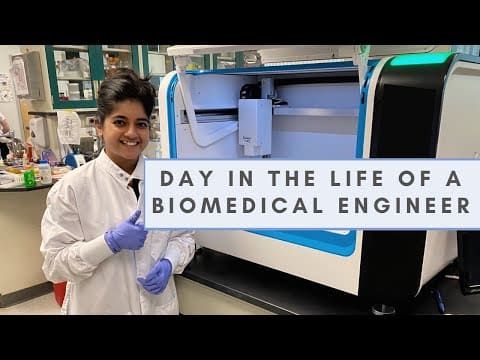
A person can get a job as a biomaterials developer by completing Biomedical Engineering in Canada.
Biomedical scientists who diagnose & help in the treatment of illness and conduct experimental & scientific studies might be a career option.
A biomedical engineer can for sure take up a job as a biotechnologist. The biotechnologist helps in creating pharmaceuticals, along with contributing to cosmetology, agriculture, etc. The average income of biotechnologists is around CAD $62600 per annum & experts can earn as high as CAD $92500 yearly for working in Canada.
A person can work as a microbiologist with a salary ranging from CAD $61200 to CAD $107400 yearly in Canada.
A rehabilitation engineer is one who works for improving aids for specially-abled persons. The salary is around CAD $28000 & ranges from CAD $35000 to CAD $43000 for experienced people annually.
A forensic Scientist is also a career option. A forensic scientist helps in solving various cases by analyzing various evidence as well as dead bodies. The salary in this field is about CAD $76000 annually.
Medical Technology Developer is another career option in which a professional one develops various technologies related to medical science. In Canada, the salary for Medical Technology Developer ranges from CAD $61000 to CAD $82000 per annum.
A toxicologist is a scientist who works with chemicals & related substances for their toxicity levels. They are basically experts on poison & toxicity. The average pay is about CAD $62700 yearly & a potential person can even have a salary as high as CAD $109100 yearly. This is among the highest-paid jobs.
Conclusion:
We can conclude that if one wants a high-quality education along with a good career opportunity in Biomedical Engineering, then one must study Biomedical Engineering in Canada. This is because Canada not only provides one of the best educations but it also provides better career opportunities.
We hope that this article was informative for you. Please share your opinions regarding this article by commenting in the comment box. Your opinions are always welcomed.
Frequently Asked Questions (FAQs):
Why is it considered best to study Biomedical Engineering in Canada?
It is considered best because the study of Biomedical Engineering is of the highest quality in Canada.
What are the career options after studying Biomedical Engineering?
There are many career options after studying Biomedical Engineering which include Toxicologists, Microbiologists, Biotechnologists, Forensic Scientists, Medical Technology developers, Rehabilitation engineers, Biomedical Scientists, Biomedical engineers, Biomaterials Developer, etc.
Which colleges provide Biomedical Engineering courses in Canada?
There are various colleges that provide Biomedical Engineering courses in Canada including Trent University, University of Manitoba, York University, Saint Mary’s University, University of Saskatchewan, etc.